

Our Focus
Not just n-of-1, but everyone
Aurora’s initial therapeutic focus will be on inborn errors of metabolism (IEMs), genetic conditions that make it hard for the body to break down or use certain critical nutrients, which can cause harmful substances to build up or important ones to be missing. Of the more than 1,400 known IEMs, only a handful have therapies that act at the root of the disease, meaning most families still rely on lifelong symptom management.
Although often identified at birth through newborn screening, without a treatment that corrects the underlying problem, many patients with IEMs face serious health challenges, starting in early childhood. These include developmental delays, cognitive decline, organ damage, and frequent medical crises. Over time, the buildup of toxic substances or the absence of essential nutrients can affect growth, learning, and quality of life.

About phenylketonuria
Our first program aims to treat phenylketonuria (PKU), a rare genetic disorder where the body cannot break down phenylalanine, an animo acid commonly found in protein-rich foods. Untreated PKU can lead to toxic accumulation of phenylalanine, ultimately resulting in irreversible brain damage and developmental delays.
PKU is primarily managed through a strict, lifelong diet that limits the intake and buildup of phenylalanine (Phe). Because Phe is present in nearly all natural proteins, this diet is among the most restrictive in medicine. While adherence is more achievable in early childhood, it becomes increasingly difficult with age: Studies show that up to two-thirds of adolescents and adults exceed recommended Phe levels. In adults, sustained elevations in Phe are associated with mood disturbances, diminished executive function, and cognitive impairment.
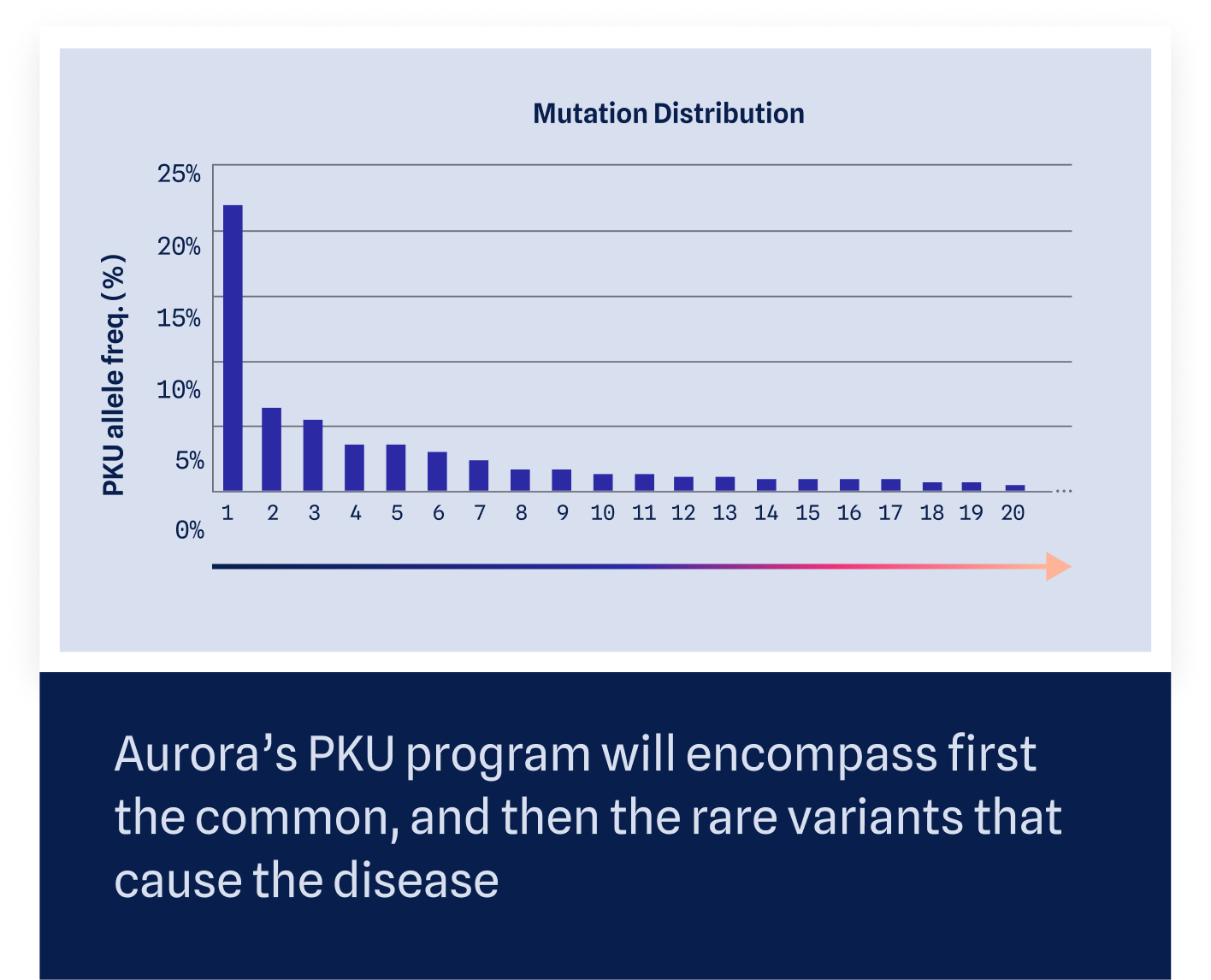
More than 1,200 different mutations in the PAH gene have been identified that can cause PKU. Aurora is designing a therapeutic that can be adapted to target multiple mutations in PKU from the outset, and which will later be broadened to address additional mutations in the same disease.